
Model covered: DREO Reverse Osmosis Water Filter Countertop System, RO Water Filter 113 5L (Amazon ASIN B0GHP7SHL4).
Maybe you rent, or maybe you just don’t want to drill into your sink. A countertop reverse osmosis (RO) system filters tap water without any plumbing work. You pour water into a tank, and the machine pushes it through a very fine membrane into a pitcher.
The DREO RO Water Filter 113 is a lower-cost way into countertop RO. Our research found it a reasonable pick for modest, steady water use. It has real tradeoffs in filling time, upkeep, and proof behind its filter claims.
This review draws on DREO’s official materials, owner reports, and editorial coverage. We didn’t test the unit ourselves.
Quick verdict: Consider the DREO 113 if you want countertop RO without plumbing and can accommodate manual refilling and regular cleaning. This is a research-based review, not a hands-on test. Verify exact-model performance evidence before buying for a specific contaminant concern.
Who the DREO 113 suits, and who should skip it
Consider it if you:
- Can’t or won’t install an under-sink system
- Use filtered water mainly for drinking, coffee, and light cooking
- Don’t mind refilling a tank by hand a few times a day
- Like having a filter-life reading right on the unit
Skip it if you:
- Want an independently verified certification listing before you buy
- Have very little space between your counter and upper cabinets
- Fill large jugs or cook big batches every day and want water on demand
Which DREO filter is this? The RO Water Filter 113 at a glance
DREO sells several countertop RO systems, including the 112, 113, 115, 511, and newer models with an “S” in the name. Many popular reviews cover the older WF511. Specs from one model should not be applied to another.
That confusion matters, because tank size, pitchers, and filters differ between models. The table lists DREO’s official specs for the 113, checked November 1, 2026.
| Spec | DREO RO Water Filter 113 |
|---|---|
| Raw water tank | 5 liters |
| Pitchers | Two 1.1-liter autofill pitchers |
| Filter | Composite RO cartridge |
| Monitoring | TDS reading and filter-life display |
| Listed dimensions | 15.67 × 6.73 × 13.35 inches |
Check the DREO 113 listing on Amazon for current availability. Amazon listings can change sellers and variations. Before checkout, confirm the listing still says RO Water Filter 113 and 5L.
What DREO’s filtration claims prove, and what they don’t
DREO describes the 113 as a seven-stage RO system. Its product page shows a graphic saying SGS, a testing company, tested it against NSF/ANSI 58. That standard covers reverse osmosis drinking water systems.
The graphic lists PFOA, PFOS, lead, mercury, chlorine, fluoride, cadmium, and total coliforms. PFOA and PFOS are two “forever chemicals” from the PFAS family. Total coliforms are a group of bacteria used as a contamination warning sign.
We have not independently verified an exact-model certification listing for the 113. Describe DREO’s SGS testing statement as a manufacturer claim, rather than calling the unit NSF certified. Before relying on a specific contaminant-reduction claim, ask for the full report and confirm the tested model.
A certified product normally appears by model number in the certifier’s public database. A marketing graphic can’t show test conditions, reduction percentages, or which unit was tested.
The TDS display needs context too. TDS means total dissolved solids, a rough measure of minerals and salts in water. A lower reading can indicate reduced dissolved solids, but it cannot establish that water is safe or confirm removal of lead, PFAS, or bacteria.
Start with your local water quality report. Match its problem contaminants against proven results. If those results matter to you, ask DREO for the complete SGS report.
Daily tradeoffs: filling, speed, wastewater, and counter space
Expect to wait a few minutes per pitcher
DREO’s FAQ lists a flow rate of about 200 to 260 mL per minute. By our math, one 1.1-liter pitcher takes roughly 4 to 6 minutes to fill. That’s a calculation from DREO’s numbers, not a timed result.
That pace works fine for topping off a water bottle before a workout. It feels slow when you need several quarts for soup or a big pot of pasta.
Allow for manual refilling and batch production when deciding whether this format fits your routine. These practical considerations are not results from hands-on testing.
It still sends some water to waste
DREO claims a 3:1 ratio, meaning three parts purified water for every one part sent to waste. A 3:1 ratio corresponds to a theoretical 75% recovery rate. It does not guarantee that each full tank will deliver 3.75 liters: tank-empty thresholds, flushing, and operating conditions can affect usable output.
Check the matching manual for how the waste water is collected and emptied. It’s an extra chore that under-sink systems handle through the drain.
Measure your counter before you order
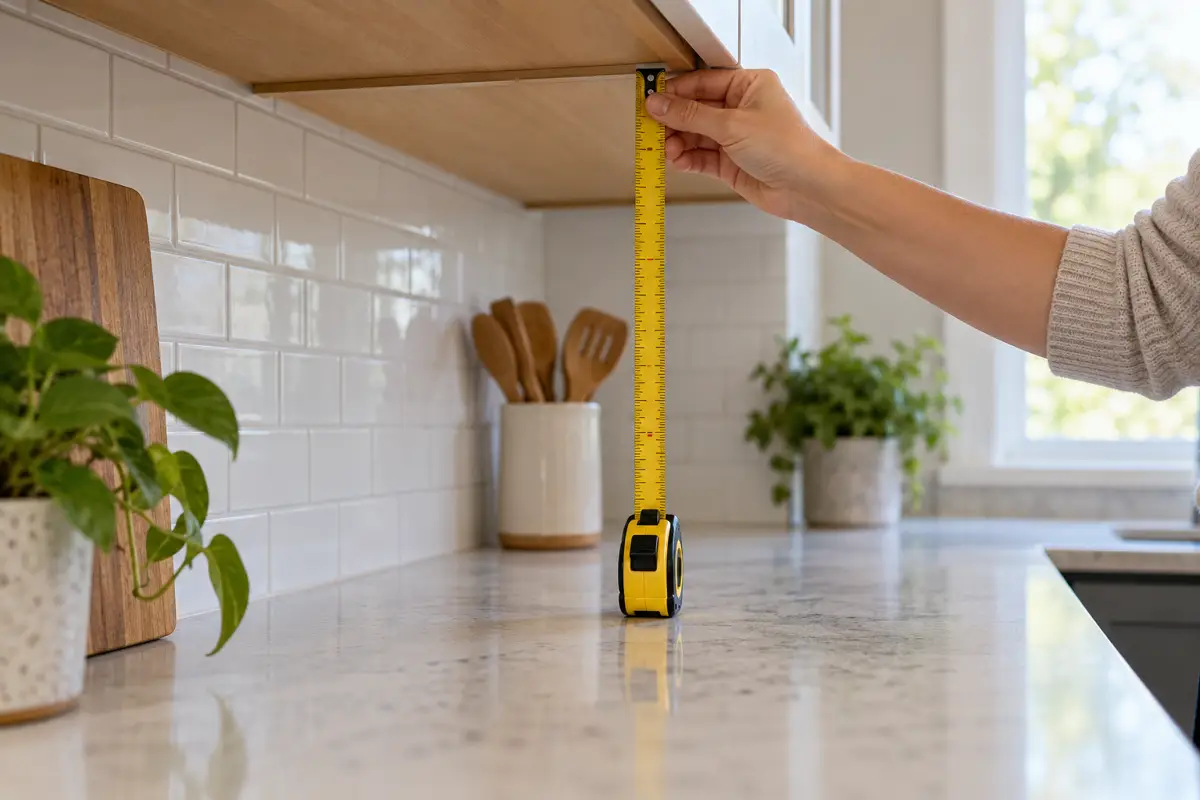
Compare the listed dimensions with the gap under your upper cabinets. Then leave room to take out and refill the tank, plus space to slide the pitchers in and out.
First setup takes four tank flushes
DREO’s FAQ says to run four full tanks through the system before first use. Plan for that water and time on day one.
What owners and DREO’s own FAQ flag
Unverified anecdotes about other DREO models are not a reliable basis for estimating the 113’s filter life or failure rate.
DREO’s troubleshooting page covers leaks from a poorly seated tank, odd odors, slow production, and TDS readings that differ from other meters. Listing a fix doesn’t mean the problem is frequent. We found no reliable failure-rate data for this model.
What the DREO 113 costs to buy and keep running
DREO’s official price for the 113 is $199.99, checked November 1, 2026. Amazon’s price wasn’t reliably visible during our research, so compare it at checkout.
The compatible replacement cartridge costs $49.99 on DREO’s site. DREO rates each cartridge at 265 gallons (1,000 liters). That works out to about $0.19 per gallon for filters alone.
That figure leaves out the unit price, electricity, waste water, cleaning supplies, and shipping. Rated capacity is a maximum under test conditions, not a promised number of months.
Two simple scenarios show how usage drives cost:
- One filter a year ($49.99): covers about 0.7 gallons a day at rated capacity.
- Two filters a year ($99.98): covers about 1.45 gallons a day at rated capacity.
Check the selected seller’s checkout for current purchase and replacement-filter terms.
Warranty and return rules differ by where you buy
DREO offers a 12-month limited warranty for original defects. It excludes normal wear, blockages, and units bought from unauthorized sellers. Routine filter replacement isn’t covered.
Buying direct from DREO gives you 30 days to return the unit in original condition with all packaging and accessories. You pay return shipping. On Amazon, the actual seller’s return terms apply instead, so read them first.
DREO 113 vs. AquaTru Carafe: price against proof
The AquaTru Carafe starts at $375, so it costs much more upfront. In return, AquaTru publishes a detailed performance data sheet. It cites IAPMO certification to specified NSF/ANSI standards and lists results contaminant by contaminant.
AquaTru has limits too. Its data sheet advises against water harder than 10 grains per gallon unless you soften it first.
If documented, contaminant-specific results are your priority, compare AquaTru’s published data with your water-quality needs. The DREO has a lower listed purchase price, but its SGS claim should not be treated as equivalent to a verified exact-model certification.
DREO 113 questions buyers ask
Can I use the DREO 113 with well water?
Don’t assume so. We couldn’t confirm DREO’s source-water rules for this model. Check the 113 manual for well water, hardness, and temperature limits before buying.
Does self-cleaning mean I never clean it by hand?
No. DREO’s FAQ still calls for cleaning the tank weekly. It also says to descale when mineral buildup slows the flow, which may come up more often with hard water.
Do DREO replacement filters fit every DREO model?
No. DREO lists one cartridge for the 112, 113, 114, and 115 series. DREO’s current replacement listing also names the 112(S), 113(S), 114(S), and 115(S). The WF511 has separate replacement products. Match the cartridge listing to your exact model before ordering.
Is the DREO 113 worth $199.99?
For renters and anyone avoiding plumbing work, the 113 is fair value if your filtered water use is modest. Its main weakness is thin proof behind the filter claims, plus hand filling and weekly cleaning.
We recommend it with conditions. If you need contaminant-specific proof, choose a model with published certification data.
Explore our water filter guides and read our editorial approach.
Sources and review method
Reviewed November 1, 2026. Product information and prices can change. Sources: DREO 113 product specifications and FAQ; DREO replacement cartridge; DREO warranty; DREO refund policy; AquaTru Carafe; AquaTru performance data sheet. We have not conducted independent laboratory or hands-on product tests.