
We may earn money or products from the companies mentioned in this post.
Choosing an under-sink water filter means answering three questions at once. What does your water actually need removed? What can your kitchen handle? And what will cartridges cost once the first set wears out?
We compared four systems that answer those questions in different ways. Two Aquasana Claryum filters skip reverse osmosis (RO), and one of them works through your existing faucet. The Waterdrop G3P600 and APEC ROES-50 are RO systems that need a drain connection and their own faucet.
If you mainly want specific certified reductions without wastewater, start with an Aquasana model. Choose RO when your water report shows a problem RO is documented to handle, such as high dissolved solids.
We didn’t test these filters by hand. This is a researched comparison built from manufacturer data sheets, manuals, certification statements, and policy pages. We checked all of them on November 6, 2026.
Four under-sink filters and the tradeoff each one makes
- Separate drinking-water tap without RO: Aquasana Claryum 3-Stage Max Flow (AQ-6300M)
- No new faucet or faucet hole: Aquasana Claryum Direct Connect (AQ-MF-1)
- Tankless RO with published cartridge schedules: Waterdrop G3P600
- Lowest displayed RO price: APEC ROES-50, once stock is confirmed
| Model | Type | Displayed price | Documentation status | Main limitation |
|---|---|---|---|---|
| Aquasana Claryum 3-Stage Max Flow (AQ-6300M) | Non-RO, dedicated faucet | 359.99promo(449.99 regular) | Aquasana states WQA certification to NSF/ANSI 42, 53, and 401 for specified claims | Older AQ-5300+ details may not apply |
| Aquasana Claryum Direct Connect (AQ-MF-1) | Non-RO, existing cold-water faucet | 199.99promo(249.99 regular) | Official page lists IAPMO certification to NSF/ANSI 42, 53, and 401 for specified claims | All filtered cold water uses cartridge capacity |
| Waterdrop G3P600 | Tankless RO, dedicated faucet | 439withcodeWDG3P600(539 regular) | Data sheet states IAPMO certification to 42 and 58 for specified claims, plus 372 for lead content | Needs power and a drain; certification wording conflicts |
| APEC ROES-50 | Tank RO, dedicated faucet | $230.99 | APEC describes WQA certification, focused on TDS testing | Stock unclear; tank takes cabinet space |
These prices appeared on official brand sites on November 6, 2026. They exclude tax, installation, and checkout changes. Aquasana’s promo price may depend on the purchase option you pick.
How we chose these four systems without hands-on testing
We picked four systems that match the real choices buyers face: existing faucet, dedicated faucet, tankless RO, and tank RO. Adding more models would mostly repeat those same tradeoffs.
When sources disagreed, we trusted them in this order:
- A certifier’s directory listing for the exact model
- The manufacturer’s performance data sheet
- The installation manual
- Official product and policy pages
- Reviews from other publishers
- Individual owner reports
One limit matters here. We couldn’t independently check current certifier directories, so certification details come from manufacturer pages and data sheets. A brand-hosted certification statement is useful, but it isn’t the same as the certifier’s own record.
We also didn’t use Amazon search results as a source for specs or prices. Search pages shift often, and they don’t reliably point to one exact model.
Aquasana Claryum 3-Stage Max Flow (AQ-6300M): a separate tap without RO
Best for: households that want a dedicated drinking-water faucet without RO’s drain line. It fits as long as Aquasana’s documents cover the contaminants on your water report.
Check the model number first. Aquasana’s current brushed-nickel page lists the AQ-6300M-BN (item 100391704) and calls it “new and improved.” Many older reviews cover the AQ-5300+, and we couldn’t confirm when the change happened.
That gap matters because dimensions, flow, cartridge fit, and installation steps may differ between versions. Make sure any listing you buy from names the AQ-6300M. Then use the current performance sheet and installation manual linked on Aquasana’s page.
Aquasana states WQA certification to NSF/ANSI 42, 53, and 401 for specified claims. “Specified” is the key word, since certification covers only the contaminants listed for that model. We’d hold off calling it a best-overall pick until the listing is confirmed in WQA’s directory.
The system carries a one-year limited warranty. Aquasana’s Water for Life benefits depend on joining its membership program. Don’t count on them unless you plan to enroll.
Skip it if: you can’t add a faucet to your sink or counter. Also skip it if your water report flags something the current AQ-6300M documents don’t list.
Aquasana Claryum Direct Connect (AQ-MF-1): filtered water from the faucet you already have
Best for: kitchens where a second faucet isn’t possible or wanted. That includes renters who get landlord approval for under-sink work.
The AQ-MF-1 connects to the cold-water line feeding your existing faucet. You skip the extra tap and the hole it needs. Aquasana’s official page lists IAPMO certification to NSF/ANSI 42, 53, and 401 for specified claims.
The tradeoff shows up in cartridge life. Every drop of cold water from that faucet runs through the filter.
That includes water for rinsing dishes or filling a mop bucket. With a 784-gallon rating, heavy sink use can reach the gallon limit before six months pass.
Aquasana backs the system with a one-year limited warranty and advertises a 90-day satisfaction guarantee. It has the lowest entry price here, but its cartridges cost the same as the Max Flow’s.
Skip it if: you run lots of cold water at the kitchen sink for cleaning. Also skip it if your water report points to dissolved solids that call for RO.
Waterdrop G3P600: tankless RO that needs power, a drain, and its own faucet
Best for: buyers whose water report shows something RO is documented to reduce, like high total dissolved solids (TDS). You’ll also need an outlet and drain access under the sink.
TDS means minerals, salts, and other matter dissolved in water. RO pushes water through a very fine membrane that holds much of that back. The rejected water then goes down the drain.
Waterdrop rates the G3P600 at 600 gallons per day with a 2:1 pure-to-drain ratio. That means about two gallons of filtered water for every gallon sent to the drain. “Tankless” means it filters on demand instead of storing water.
Waterdrop lists the unit at 18.11 by 5.67 by 17.73 inches. Measure for that footprint, and leave space in front to pull cartridges out.
Certification needs a careful read. The main spec list names NSF/ANSI 42, 58, and 372. Other parts of the page use inconsistent wording.
The linked V005 data sheet states IAPMO certification to 42 and 58 for specified claims. That same sheet lists 372 for lead content, which concerns the materials in the product. It isn’t a lead-reduction claim, so don’t read it as one.
The sheet reports 93.59% TDS reduction and 88.23% fluoride reduction under its test conditions. Separate tables describe additional testing, which isn’t automatically a certified claim. The sheet we viewed doesn’t establish a PFAS reduction claim.
Waterdrop advertises a one-year warranty and 30-day returns. Read the full policies for eligibility and shipping terms before you order.
A few owners online have described faucet leaks or sudden low flow. Those isolated posts don’t show how common such problems are or what caused them.
Skip it if: there’s no outlet under your sink, your water doesn’t need RO, or you need confirmed certified PFAS reduction.
APEC ROES-50: lower-priced tank RO, if it’s actually in stock
Best for: RO buyers with roomy cabinets who want a lower upfront price and standard-sized replacement parts.
The ROES-50 is a five-stage RO system with a storage tank and a dedicated faucet. APEC rates it at 50 gallons per day and lists a nominal four-gallon tank. “Nominal” is the stated size, so check usable capacity and tank dimensions before buying.
Availability was unclear when we checked. APEC’s page showed both “Sold out” and an add-to-cart button, so confirm stock before ordering.
APEC describes WQA certification and specifically discusses TDS-reduction testing. Its broader contaminant marketing isn’t a confirmed list of certified reductions. Look up the exact claims you care about.
Standard-sized housings make cartridges easier to find. Still, a cartridge that fits isn’t proof the system keeps its certification or your warranty.
The manual’s one-year limited warranty has conditions tied to installation, maintenance, operating conditions, authorized sellers, and replacement parts. APEC offers lifetime technical support, but that isn’t a lifetime product warranty.
Skip it if: a garbage disposal and pipes already crowd your cabinet, or a non-RO filter covers your water concerns.
Installation: drilling, drains, outlets, and cabinet space
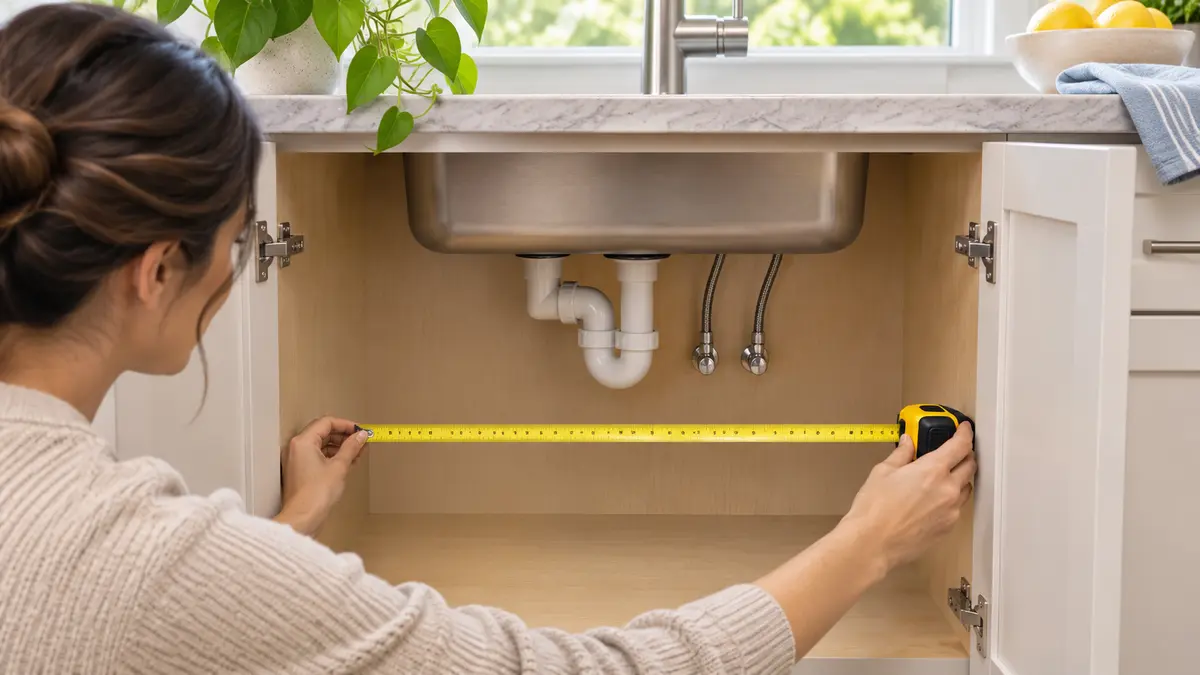
These four systems sit on a ladder of installation work. Each step up adds a requirement, so match the system to what your kitchen and lease allow.
- Existing faucet (AQ-MF-1): connects under the sink to your cold-water supply. No new faucet hole is needed.
- Dedicated faucet (AQ-6300M): needs an opening for a second faucet in the sink or counter. Without a spare hole, that usually means drilling.
- RO with drain (G3P600 and ROES-50): adds a dedicated faucet plus a connection to your sink drain for rejected water.
- RO with power (G3P600): also needs an electrical outlet within reach under the sink.
Cabinet space is the next hurdle. Garbage disposals, drain traps, and shutoff valves already crowd most sink bases. Measure the open space, then leave room to reach and swap cartridges for years.
The ROES-50’s tank needs its own floor space beside the filter stages. The tankless G3P600 skips the tank but is a large single unit.
Renters should get written landlord approval before drilling a counter or tapping a drain line. If permanent changes are off the table, see our countertop RO alternative without permanent plumbing. That review notes its own evidence limits, so don’t assume matching certified performance.
Before buying any model, download its current installation manual. It shows the required connections and steps more reliably than product photos.
What replacement filters cost per year, and what that number leaves out
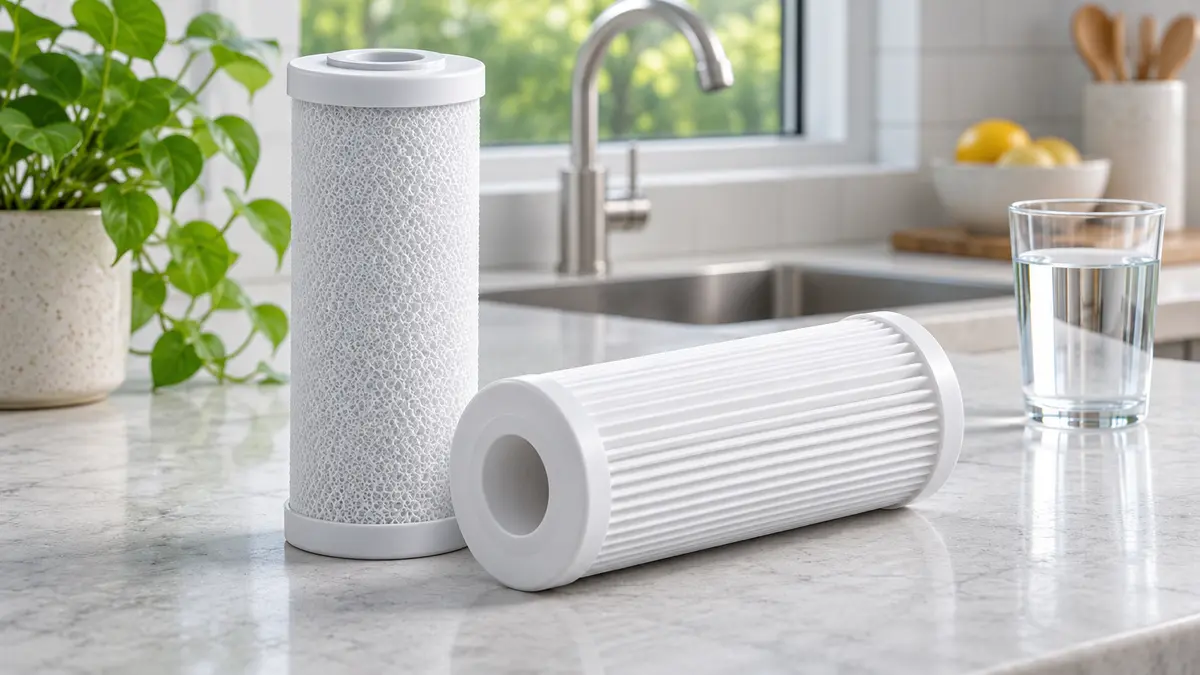
Cartridges, not the system price, shape long-term cost. The figures below are yearly allowances based on official replacement prices and maximum time intervals. They aren’t guaranteed bills.
| System | Replacement schedule and price | Estimated yearly cartridge cost |
|---|---|---|
| Aquasana Max Flow (AQ-6300M) | AQ-C3M-R at 91.99(78.19 with Water for Life), every six months or 800 gallons | 183.98(156.38 with membership) |
| Aquasana Direct Connect (AQ-MF-1) | AQ-MF-1-R at 91.99(78.19 with Water for Life), every six months or 784 gallons | 183.98(156.38 with membership) |
| Waterdrop G3P600 | G3-N1CF $29.99 (six months or 550 gallons); G3-N3CB $29.99 (12 months or 1,100 gallons); G3P600-RO $109.99 (24 months or 2,200 gallons) | $144.97 long-run average |
| APEC ROES-50 | Stages 1 to 3 set $29.95 every six to 12 months; membrane and post-carbon every two to four years; complete stages 1 to 5 set $79.99 | $29.95 to $59.90 for prefilters, plus membrane and postfilter when due |
Aquasana’s prices come from its April 2026 renewal-cycle notice, so older estimates elsewhere may understate today’s cost. Confirm that AQ-C3M-R is the right cartridge for the AQ-6300M. An older replacement page still references the AQ-5300+.
The Waterdrop figure counts two N1CF cartridges, one N3CB, and half the price of a membrane each year. For APEC, a complete set includes the prefilters, so don’t buy a separate prefilter set that same year.
Your first year should cost less than these averages. The cartridges that ship with the system cover the first stretch, so don’t pay for them twice in your budget.
Here’s a two-year cash example at displayed prices, replacing cartridges at their time limits:
- Max Flow: $359.99 plus three cartridges at $91.99 comes to $635.96.
- Direct Connect: $199.99 plus three cartridges comes to $475.96.
- G3P600: $439 plus three N1CF cartridges and one N3CB comes to $558.96. The $109.99 membrane comes due around the two-year mark.
These totals leave out tax, shipping, and installation. For RO, they also skip drain water and the G3P600’s electricity. Heavy use can trigger gallon limits early, especially with the Direct Connect.
Carbon filter or reverse osmosis: let your water report decide
RO fits best when your water report shows high dissolved solids. It also fits when the report lists a contaminant an RO model is documented to reduce. A non-RO filter is the simpler choice when its certified claims already cover your concerns.
The Aquasana systems avoid drain water and extra hardware. Their certifications reference three standards.
NSF/ANSI 42 covers aesthetic issues like chlorine taste and odor. Standard 53 covers listed health-related contaminants, and 401 covers listed emerging compounds.
RO adds membrane filtration and lower TDS. It also brings wastewater, more cabinet use, and, for the G3P600, electricity. If your water doesn’t need RO, you’d be paying for extra equipment you don’t need.
Don’t judge a filter by its stage count or a TDS meter reading. Lower TDS doesn’t prove a filter removes any specific contaminant. EPA’s WaterSense RO specification treats verified TDS reduction and individual contaminant claims separately.
To check whether a claim applies to your exact filter:
- Get your utility’s water quality report or test your water.
- Write down the exact model number, including any letter suffixes.
- Find your contaminant on that model’s performance data sheet.
- Look up the model in the certifier’s directory and confirm the claim is listed.
- Confirm the replacement cartridge you’ll buy is the one covered.
For PFAS, the EPA advises matching certification to the specific PFAS claim and checking the certifier’s directory. A standard number alone doesn’t guarantee every contaminant. For more help reading reports and planning upkeep, browse our water filter guides.
Questions buyers ask before choosing an under-sink filter
Does NSF/ANSI 58 certification mean every advertised reduction is certified?
No. NSF/ANSI 58 is the RO standard, but certification covers only the specific claims listed for that model. Waterdrop’s own data sheet separates certified claims from additional test tables, which shows why each contaminant needs checking.
Why might I need a new cartridge before the advertised maximum?
Each rating pairs a time limit with a gallon limit, and heavy use can hit the gallon limit first. Your model’s manual may also list earlier replacement signs, so follow it over general rules.
Can I use cheaper compatible cartridges?
You can, but a cartridge that fits isn’t proof the system keeps its certification. APEC’s warranty also has replacement-part conditions, so read the terms before switching brands.
Do Aquasana’s return terms apply if I buy on Amazon?
Not automatically. Aquasana’s direct-purchase policy gives 90 days from the order date. It needs authorization and the complete system, and you pay return shipping. Amazon orders follow the seller’s own policy.
Do I need a professional installer?
That depends on your skills and the system you pick. RO adds drain work and, for the G3P600, an outlet. We didn’t verify typical labor costs, so get a quote. Some warranties, like APEC’s, also carry installation conditions.
Which under-sink water filter should you buy?
For most households, the choice comes down to installation limits and what your water report shows.
- Can’t add a faucet: the Aquasana AQ-MF-1, as long as your cold-water use at the sink is modest.
- Want a separate tap without RO: the Aquasana AQ-6300M, once you confirm the listing matches the current model.
- Need RO and have an outlet: the Waterdrop G3P600, which publishes the clearest cartridge schedule of the RO pair.
- Need RO on a tighter upfront budget: the APEC ROES-50, if it’s in stock and your cabinet fits the tank.
The group’s strongest benefit is real choice in how much plumbing work you take on. The biggest limitation is documentation. We couldn’t check any certification against live certifier directories, and two brands showed model or wording gaps.
On value, the Direct Connect has the lowest entry price, while the Waterdrop has the lowest estimated yearly cartridge cost. The evidence supports a conditional recommendation for each, provided the exact model’s documents cover your water concerns.
Leave a Reply