
We may earn money or products from the companies mentioned in this post.
The Waterdrop G3P600 is the better fit if you want a slim, tankless unit and routinely fill pitchers or pots back to back. The APEC ROES-50 makes more sense if you have room for a storage tank, want to avoid adding an electrical outlet, and prefer lower filter costs. Check your cabinet layout and outlet first. Those two details may make the choice for you.
This comparison is based on manufacturer specifications, installation documentation, and replacement-filter listings. We did not test either system hands-on.
As an Amazon Associate I earn from qualifying purchases.
View Waterdrop G3P600 on Amazon · View APEC ROES-50 on Amazon
Waterdrop G3P600 vs. APEC ROES-50 at a glance
| What to compare | Waterdrop G3P600 | APEC ROES-50 |
|---|---|---|
| Design | Powered, tankless unit | Filter assembly with a separate pressurized tank |
| Cabinet space | About 18.1 inches deep × 5.7 wide × 17.7 high | Filter assembly about 15.5 × 5.25 × 17 inches, plus a separate 11 × 11 × 15-inch tank |
| Manufacturer-rated production | 600 gallons per day | 50 gallons per day at 60 psi. APEC also lists 30 gallons per day at 50 psi and 77°F. |
| Electrical outlet | Required | Standard system runs on water pressure |
| Filter upkeep | CF, CB, and RO cartridges on staggered schedules | Three prefilters plus an RO membrane and a final carbon filter |
Sources: Waterdrop G3P600 specifications and APEC ROES-50 specifications.
Cabinet space and installation
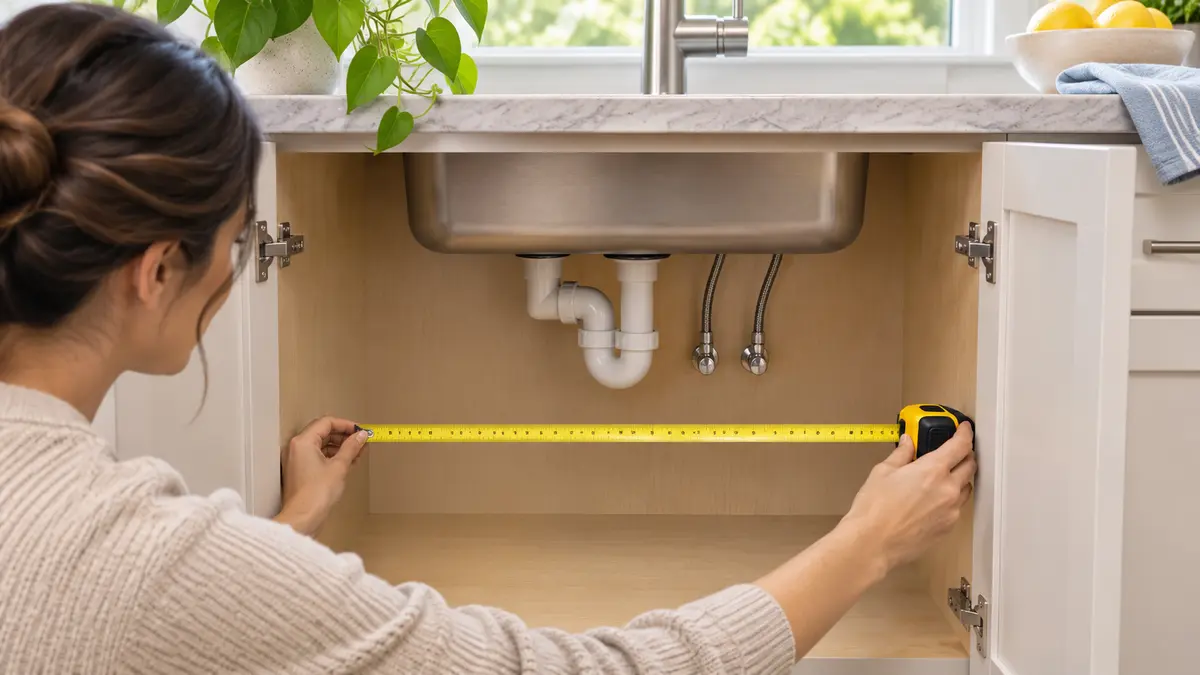
The Waterdrop’s narrow housing is useful when your disposal, drain trap, or cleaning supplies already crowd the cabinet. Measure the available depth and height, then leave room to pull the cartridges out and route the tubing. Confirm there’s a usable outlet within reach. If you plan to use a disposal outlet, check that the socket you intend to use stays powered when the wall switch is off.
The APEC filter assembly is narrow too, but you also need a spot for its four-gallon nominal tank. Measure the cabinet opening as well as the interior, and leave working room beneath the filter housings for cartridge changes. Check the manual before choosing where to mount the assembly or place the tank.
Both systems need a cold-water connection, a drain connection, and a dedicated drinking-water faucet. Check for a spare faucet hole before ordering. If the sink or countertop needs drilling, include that in your installation quote. See our under-sink water filter guide for more fit and installation questions.
Which one fills a pitcher faster?
Waterdrop lists a flow rate of about 0.42 gallons per minute. The APEC faucet draws from stored water while its tank has water available. Once that supply runs low, the membrane needs time to refill it. APEC’s 50-gallon-per-day rating describes membrane production under specified conditions. Comparing 600 with 50 doesn’t tell you how much faster either faucet fills the first glass.
Choose the Waterdrop if you regularly fill several large containers in one session and want to avoid waiting for a tank refill. The APEC’s stored supply can make sense for everyday glasses and occasional cooking. Actual flow and refill times depend on the installation and water conditions.
What do replacement filters cost?
Waterdrop lists typical replacement intervals of six months for the CF cartridge, 12 months for the CB cartridge, and 24 months for the RO membrane. Its G3P600 comparison table quotes about $145 per year for those filters. Check the price of the exact cartridges for the standard G3P600 before ordering, especially if the listing includes a separate remineralization cartridge.
APEC’s ROES-50 replacement catalog listed the stages 1–3 prefilter set at $29.95 and the full stages 1–5 set at $79.99. The full set includes the prefilters, so count it in place of a prefilter-only purchase when you replace all five stages together. Follow the ROES-50 manual for your replacement schedule. These are manufacturer price references and exclude tax, shipping, labor, and water costs.
What to check about filtration and wastewater
Both systems use reverse osmosis. If you’re buying to address a specific contaminant, check the certification listing or performance data sheet for the exact model and the specific reduction claim. Waterdrop lists NSF/ANSI 58 and 372 for model WD-G3P600-W. A faucet’s total dissolved solids reading can help you track changes over time, but it cannot identify individual contaminants.
Waterdrop advertises a 2:1 purified-water-to-drain ratio. That’s a manufacturer rating. A fair wastewater comparison would use measured performance for both systems under comparable conditions, including the APEC tank’s refill cycle.
Which one should you buy?
- Choose the Waterdrop G3P600 if you have an outlet, want to save cabinet width, and regularly fill large containers back to back.
- Choose the APEC ROES-50 if you can fit the tank, want a system that runs without electricity, and prioritize replacement-filter costs.
Before ordering, measure around the drain and disposal, check the faucet opening, and price the first two years of replacement filters for the exact bundle you plan to buy.
Leave a Reply