Choose a refillable countertop reverse osmosis (RO) system if you want to avoid plumbing changes and have room beside an outlet. Choose under-sink RO if you want filtered water from a dedicated tap and have space for the equipment, tubing, and any storage tank.
Countertop vs. under-sink RO at a glance
| What to check | Refillable countertop RO | Under-sink RO |
|---|---|---|
| Setup | Plug in, fill the feed tank, and follow the initial flushing instructions. | Connect to cold water and a drain, then fit the dispensing faucet. |
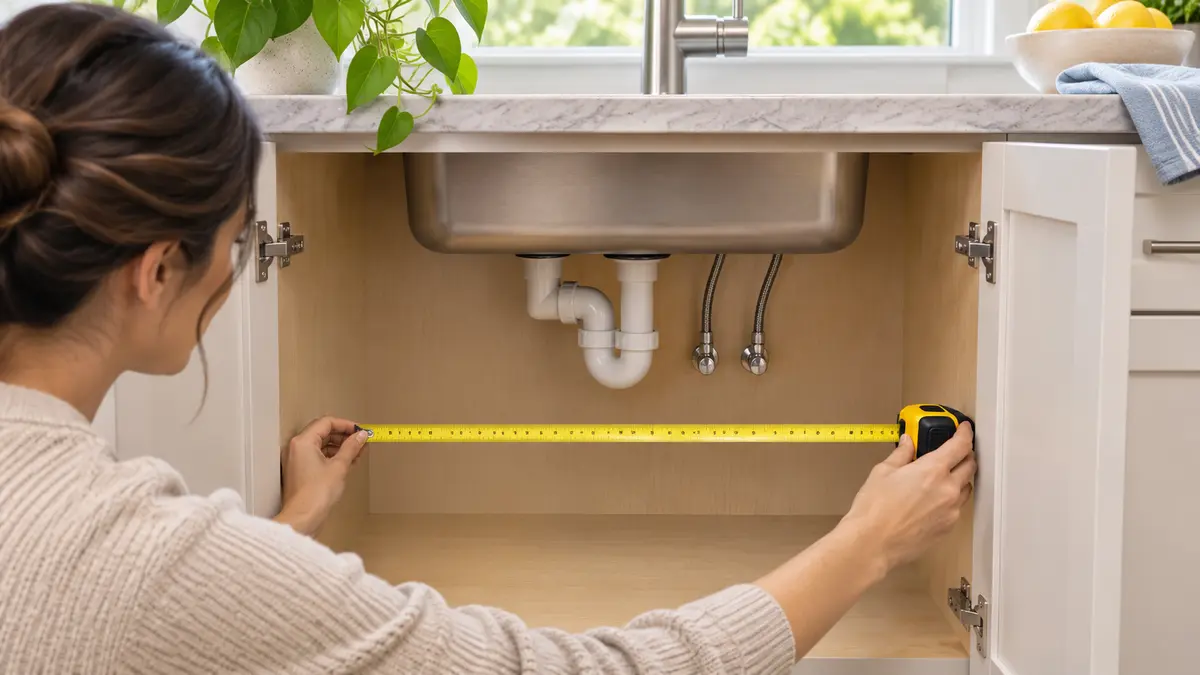
| Space | Measure the footprint and leave room to remove the tank or open the lid. | Measure around the disposal, plumbing, and cabinet hinges. Allow room to change filters. |
| Daily routine | Refill the feed tank, empty leftover concentrate as directed, and clean the reservoir. | Draw water from a dedicated tap. The system routes concentrate to the drain. |
| Power | Plug-in models need a nearby outlet. | Depends on the model. Confirm outlet requirements before buying. |
When countertop RO makes sense
A refillable model makes sense in a rental, a short-term living situation, or a kitchen where cabinet space is already spoken for. Measure from the counter to the underside of your upper cabinet. A unit can fit on paper and still be awkward to refill if you have to pull it forward every time.
Think through a normal morning. If you fill a kettle, a coffee maker, and multiple bottles, check how much finished water the unit dispenses per batch and how long it takes. Feed-tank capacity describes how much water goes in. Some of that water becomes concentrate, so check finished-water capacity separately. The DREO 113 review covers the day-to-day tradeoffs for one refillable model.
When under-sink RO makes sense
Under-sink RO suits households that frequently fill bottles, kettles, or cooking pots and want the counter clear. Check whether your sink has a spare faucet opening, whether the cabinet can accommodate a drain connection, and whether you have permission to make any necessary changes.
Tank systems store treated water and refill after use. With a tankless model, compare the dispensing flow and power needs. The Waterdrop G3P600, for example, requires an outlet. The APEC ROES-50 uses a storage tank. Our Waterdrop vs. APEC comparison walks through both layouts.
Compare the first two years of ownership
Start with the purchase price and add any faucet, fitting, or installation costs. Then list each replacement cartridge and membrane from the manual. Multiply the price of each part by the number of changes expected in two years under your household’s usage. When comparing water efficiency, use the exact model’s stated ratio and check whether the manufacturer reports purified water to drain water or the reverse.
If you are shopping for a specific contaminant, check the exact model’s performance data sheet for a reduction claim. The mounting style alone tells you little about that claim. For more options, see our under-sink water filter guide.
Research basis. This guide uses manufacturer documentation and a comparison of installation and maintenance routines.